Piano Instructor in Mombasa: The Complete Guide to Finding the Best Private Piano Teacher for Kids and Adults
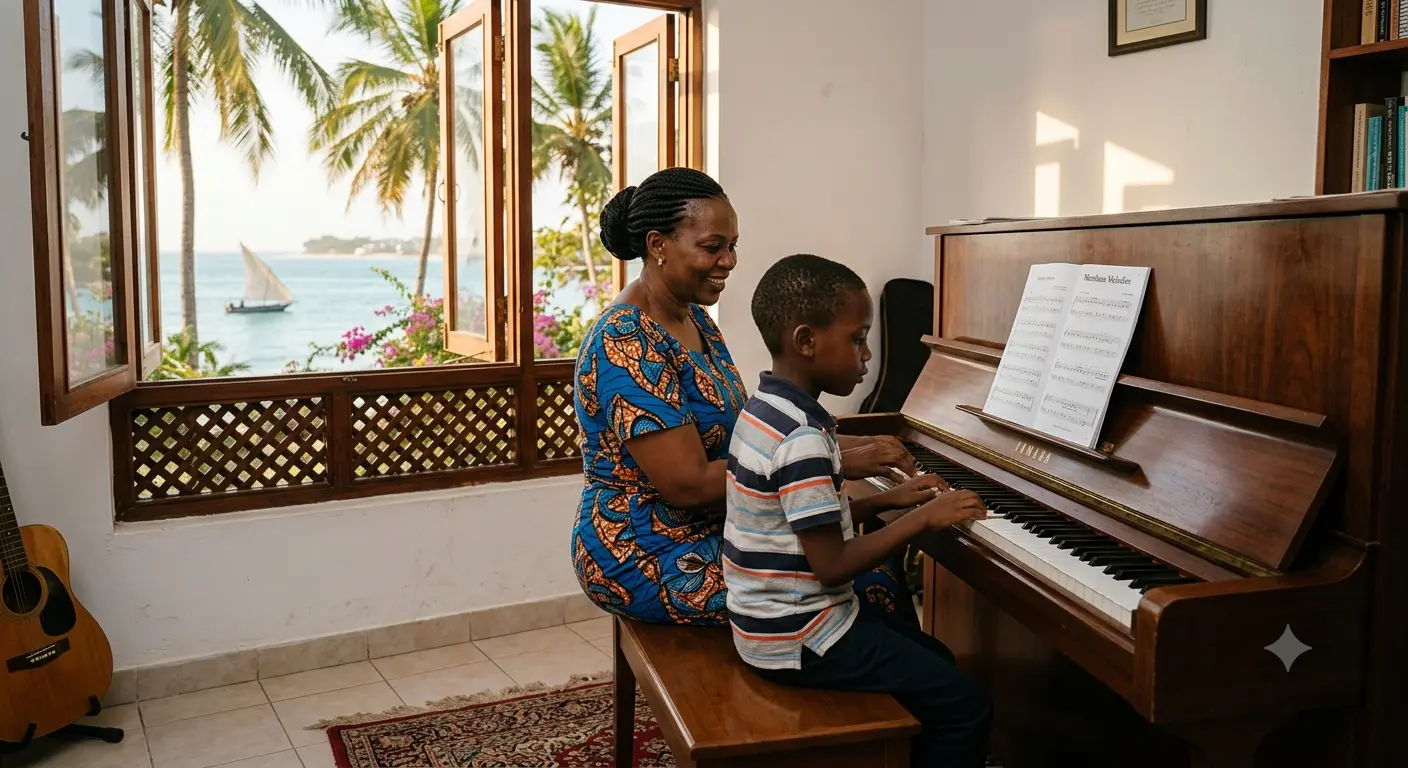
Looking for a professional piano instructor in Mombasa? Whether you're searching for piano lessons for yourself, your child, or a loved one, this comprehensive guide explains everything you need to know, from choosing the right teacher to understanding lesson costs, learning styles, and what to expect during your musical journey.
Everything You Need to Know Before Hiring a Piano Instructor in Mombasa
Learning to play the piano is one of the most rewarding skills anyone can develop. The benefits of playing a piano are super enormous. Beyond creating beautiful music, piano lessons improve concentration, creativity, discipline, confidence, and memory. Whether your dream is to perform on stage, play during church services, compose music, or simply enjoy a fulfilling hobby, finding the right piano instructor in Mombasa is the first step toward success.
Fortunately, Mombasa has a growing community of talented piano instructors offering private lessons, home tuition, studio sessions, and online coaching. From beginners who have never touched a keyboard to advanced students preparing for international music examinations, there is a qualified teacher suited to every learner.
Whether you're searching for a piano instructor in Mombasa, a private piano tutor, or piano lessons near you, you've come to the right place.
Perhaps you're looking for a piano teacher for your child, adult piano classes, or a qualified instructor to help you prepare for music exams, church performances, or simply learn as a hobby.
You may also be looking for keyboard lessons in Nyali, piano lessons in Bamburi, a home piano tutor in Shanzu, or a private instructor serving Kiembeni, Tudor, Kisauni, Miritini, Changamwe, Likoni, or other parts of Mombasa County.
Whatever your musical goals or experience level, this comprehensive guide will help you choose the right piano instructor and start your learning journey with confidence.
Who Can Benefit from Piano Lessons?
One common misconception is that piano lessons are only for a certain category of individuals. In reality, anyone can learn to play the piano with the right instructor.
Children (Ages 4–12)
Young learners benefit from developing:
- Hand-eye coordination
- Listening skills
- Discipline
- Patience
- Confidence
- Creativity
- Fine motor skills
Many instructors use games, storytelling, rhythm exercises, and colorful learning materials to make lessons enjoyable for younger students.
Teenagers
Teenagers often begin piano lessons because they want to:
- Join a school music club
- Play in church
- Learn contemporary worship music
- Perform popular songs
- Prepare for music examinations
- Develop composition skills
A good piano teacher understands how to keep teenagers engaged by incorporating modern music alongside classical techniques.
Adults
Many adult learners start lessons because they have always wanted to play but never had the opportunity. Others want to:
- Learn a relaxing hobby
- Play during family gatherings
- Accompany singers
- Improve worship leading
- Compose music
- Reduce stress after work
Adult lessons are usually customized to individual goals, making progress both enjoyable and practical.
Senior Citizens
Learning the piano later in life keeps the brain active and provides a deeply satisfying creative outlet.
Research has consistently linked musical learning with improved cognitive function, memory retention, coordination, and emotional well-being.
Many instructors in Mombasa now happily teach retirees who simply want to enjoy making music.
What Does a Piano Instructor Actually Teach?
Many people assume piano lessons only involve learning songs.
A professional instructor teaches far more than that.
Students typically learn:
Piano Technique
Proper hand position, posture, finger strength, coordination, and movement.
Good technique prevents injury and makes playing easier as pieces become more challenging.
Reading Music
Students gradually learn how to read:
- Musical notes
- Rhythm
- Time signatures
- Dynamics
- Key signatures
- Musical symbols
Reading music allows students to play almost any piece independently.
Ear Training
One of the most valuable skills musicians develop is the ability to recognize notes, chords, intervals, and melodies simply by listening.
This greatly improves overall musicianship.
Rhythm
Keeping accurate timing is essential.
Lessons often include:
- Counting exercises
- Metronome practice
- Clapping rhythms
- Beat recognition
Chords and Harmony
Students learn:
- Major chords
- Minor chords
- Seventh chords
- Chord inversions
- Progressions
These skills are especially useful for church musicians and contemporary performers.
Improvisation
Some instructors teach students how to create their own music without relying entirely on sheet music.
Improvisation encourages creativity and confidence.
Music Theory
Theory explains why music works.
Topics include:
- Scales
- Keys
- Chord construction
- Harmony
- Composition
- Musical forms
Theory transforms students from simply copying songs into understanding music itself.
Private Piano Lessons vs Music Schools in Mombasa
Many families wonder whether they should hire a private piano instructor or enroll at a music academy.
Each option has advantages.
Private Piano Instructor
Ideal if you want:
- One-on-one attention
- Flexible scheduling
- Lessons at home
- Customized learning plans
- Faster progress
- Personalized feedback
Private lessons allow the teacher to focus entirely on one student's strengths and challenges.
Music Schools
Music academies are often suitable for students who enjoy structured environments, group interaction, and access to additional instruments or ensemble opportunities.
However, group settings may limit the amount of individualized attention each learner receives.
Many students choose to combine both approaches by attending a music school while also working with a private tutor to accelerate their progress.
Home Piano Lessons in Mombasa
One growing trend is home-based piano instruction. Instead of traveling across town, the instructor visits the student's residence.
Home lessons are particularly popular in:
- Nyali
- Bamburi
- Shanzu
- Kiembeni
- Tudor
- Mkomani
- Kizingo
- Changamwe
- Miritini
- Port Reitz
- Likoni
- Shelly Beach
Families appreciate the convenience, reduced travel time, and comfortable learning environment.
Children also tend to feel more relaxed learning in familiar surroundings, which can improve concentration and confidence.
Additionally, home lessons allow instructors to work with the exact piano or keyboard the student uses for daily practice, making their guidance more practical and personalized.
How to Choose the Best Piano Instructor in Mombasa
Not all piano teachers have the same teaching style, qualifications, or experience. Choosing the right instructor can make the difference between enjoying the learning process and giving up after a few weeks.
Before committing to lessons, consider the following factors.
1. Experience Teaching Your Skill Level
A teacher who excels at coaching advanced musicians may not necessarily be the best fit for a complete beginner. Likewise, someone who mainly teaches young children may not be ideal if you're an adult looking to learn jazz improvisation or accompany a church choir.
Ask whether the instructor has experience teaching:
- Complete beginners
- Young children
- Teenagers
- Adult learners
- Intermediate students
- Advanced pianists
The best instructors tailor their lessons to the student's age, goals, and pace of learning rather than using a one-size-fits-all approach.
2. Musical Qualifications and Training
While formal qualifications aren't the only indicator of a great teacher, they can provide confidence in the instructor's technical knowledge.
Many professional piano instructors have backgrounds in:
- Music education
- Classical piano performance
- Church music
- Conservatory training
- International music examination boards such as ABRSM or Trinity College London.
More importantly, ask about their teaching experience and the progress their students have made.
3. Teaching Style
Every student learns differently.
Some students thrive with structured classical instruction, while others stay motivated by learning modern songs they already know and enjoy.
A good instructor should be flexible enough to adapt lessons based on your goals, whether you want to:
- Play worship music
- Learn classical pieces
- Perform contemporary songs
- Accompany singers
- Compose your own music
- Prepare for music examinations
- Simply play for personal enjoyment
4. Patience and Communication
Wondering how long it takes to learn the piano? Even naturally gifted students spend many months mastering the instrument.
An excellent piano instructor explains concepts clearly, encourages steady progress, and celebrates small milestones instead of making students feel discouraged.
This is especially important when teaching young children or adult beginners who may initially lack confidence.
5. Lesson Location
Different instructors offer different learning options.
These may include:
Home Lessons
The teacher visits your home for private one-on-one instruction.
Ideal for busy professionals, parents, and families with young children.
Studio Lessons
Students travel to the instructor's music studio.
Studios often have high-quality acoustic pianos and fewer distractions.
Online Lessons
Modern video conferencing makes it possible to receive piano instruction from anywhere.
Online lessons work particularly well for:
- Adults with busy schedules
- Students who travel frequently
- Learners living outside central Mombasa
- Intermediate students seeking specialized coaching
Should You Choose Home Piano Lessons or Studio Lessons?
There isn't a universal answer. It depends on your circumstances.
Home Lessons Are Best If:
- You have a busy schedule.
- You want maximum convenience.
- Your child learns better in familiar surroundings.
- You prefer one-on-one attention.
- You don't want to spend time commuting through Mombasa traffic.
Many families in Nyali, Bamburi, Kiembeni, Shanzu, Tudor, Kisauni, Changamwe, Miritini, Port Reitz, and Likoni choose home tuition because it saves valuable time while providing personalized instruction.
Studio Lessons Are Suitable If:
- You enjoy a dedicated learning environment.
- You want access to an acoustic piano.
- You appreciate fewer distractions.
- You don't mind travelling for lessons.
Some students even combine both options depending on availability.
Looking for a Reliable Private Piano Tutor in Mombasa?
Choosing the right piano instructor can feel overwhelming, especially if you're not sure where to begin.
Instead of spending hours searching through social media, asking for referrals, or comparing dozens of profiles, let Finders simplify the process.
Whether you're looking for lessons for yourself, your child, or a loved one, simply fill out the Client Request Form on Finders.co.ke. We'll connect you with a reliable private piano instructor in Mombasa based on your preferred location, learning goals, schedule, and budget, saving you time while helping you find the right match.
How Much Do Piano Lessons Cost in Mombasa?
One of the first questions many people ask is:
"How much should I expect to pay for piano lessons?"
The answer depends on several factors rather than a single fixed price.
Lesson fees often vary based on:
- The instructor's experience
- Lesson duration
- Home versus studio lessons
- Travel distance
- Student's skill level
- Individual versus group lessons
- Frequency of lessons
While highly experienced instructors may charge more, their expertise can often lead to faster progress and a more rewarding learning experience.
Instead of focusing solely on the lowest price, consider the value you'll receive in terms of teaching quality, personalized guidance, and long-term musical development.
How Often Should You Take Piano Lessons?
Consistency matters far more than intensity.
For most beginners, one lesson each week provides enough time to learn new material while allowing several days to practice independently.
Students preparing for performances, competitions, or music examinations may benefit from additional sessions.
Equally important is regular practice between lessons.
Even 20–30 minutes of focused daily practice often produces better results than several hours of practice once a week.
How Long Does It Take to Learn Piano?
This is perhaps the most frequently asked question, and the honest answer is that it takes approximately 10–15 years, depending on several factors.
These include:
- Your practice routine
- Lesson frequency
- Previous musical experience
- Personal goals
- Quality of instruction
Many beginners can play simple melodies and chords within the first few weeks.
After several months of consistent practice, students often develop enough confidence to perform recognizable songs.
Mastering advanced techniques, however, is a long-term journey that rewards patience and dedication.
Remember, learning the piano isn't about reaching a finish line—it's about continually growing as a musician.
Piano Lessons for Children in Mombasa
Parents often wonder whether their child is ready to begin piano lessons.
Most instructors recommend starting once a child can:
- Follow simple instructions.
- Sit and concentrate for around 30 minutes.
- Recognize basic numbers and letters.
- Show genuine interest in music.
The youngest learners benefit most from fun, engaging lessons that combine rhythm games, ear training, storytelling, singing, and hands-on keyboard activities.
Rather than rushing into difficult pieces, experienced teachers build confidence gradually, ensuring children enjoy every stage of their musical development.
When lessons are enjoyable, children are far more likely to stay motivated and continue learning for years to come.
Piano Lessons for Adults
One of the biggest myths about learning the piano is that you have to start as a child. But it's never too late to start. In fact, adults often make excellent students because they are self-motivated, understand the value of consistent practice, and usually have clear goals.
Whether you're in your twenties, thirties, forties, fifties, or beyond, you can learn to play the piano successfully with the right guidance.
Many adults in Mombasa begin lessons because they want to:
- Learn a lifelong hobby.
- Play worship songs at church.
- Relax after work.
- Surprise family and friends with a new skill.
- Learn alongside their children.
- Prepare for live performances.
- Compose original music.
- Improve their understanding of music theory.
Unlike children, adults don't need to compare themselves with others. Progress isn't about age; it's about consistency, patience, and enjoying the journey.
Piano Lessons for Children Build More Than Musical Skills
Parents often enroll their children in piano lessons because they want them to learn music, but the benefits go much further.
Learning the piano can help children develop:
- Better concentration.
- Improved listening skills.
- Hand-eye coordination.
- Discipline and patience.
- Confidence through achievement.
- Creativity and self-expression.
- Goal-setting habits.
- Problem-solving abilities.
Perhaps most importantly, music teaches perseverance. Children quickly discover that improvement comes through regular practice, helping them build resilience that extends beyond the keyboard.
Should You Learn Piano or Keyboard?
Many beginners use the terms piano and keyboard interchangeably, but there are important differences.
Piano
An acoustic piano produces sound naturally through hammers striking strings. It offers richer tone, greater dynamic control, and a traditional playing experience.
It is ideal for:
- Classical music
- Advanced performance
- Music examinations
- Serious long-term study
Keyboard
Electronic keyboards are more affordable, portable, and practical for many beginners.
They often include:
- Hundreds of instrument sounds
- Rhythm accompaniments
- Recording features
- Built-in learning functions
- Headphone support for quiet practice
A quality keyboard with touch-sensitive keys is an excellent starting point for most beginners before investing in a full-sized piano.
A professional instructor can advise you on which option best suits your goals and budget.
Classical Piano vs Contemporary Piano
Different students have different musical interests.
Some dream of playing Mozart or Beethoven.
Others want to perform gospel songs, pop music, Afro-fusion, jazz, or contemporary worship music.
Fortunately, you don't always have to choose one path.
Classical Piano
Classical training develops:
- Strong technique.
- Excellent sight-reading.
- Finger independence.
- Music theory.
- Precision and discipline.
It provides a solid foundation that makes learning other genres much easier.
Contemporary Piano
Contemporary lessons often focus on:
- Chord progressions.
- Playing by ear.
- Improvisation.
- Worship accompaniment.
- Pop songs.
- Jazz harmony.
- Band performance.
Many instructors combine both approaches, giving students a well-rounded musical education.
Church Keyboard Lessons in Mombasa
Many aspiring musicians want to play during church services.
Church keyboard playing requires a unique set of skills beyond simply reading sheet music.
Students typically learn:
- Worship chord progressions.
- Smooth chord transitions.
- Playing with singers.
- Modulation between keys.
- Improvisation.
- Intro and ending techniques.
- Band coordination.
- Ear training.
Whether you attend church in Nyali, Bamburi, Kisauni, Tudor, Changamwe, Likoni, or elsewhere in Mombasa County, a qualified instructor can help you build the confidence to support congregational worship with excellence.
Common Mistakes People Make When Choosing a Piano Teacher
Finding the right instructor involves more than comparing prices.
Avoid these common mistakes.
Choosing Based Only on Cost
The cheapest lessons aren't always the best value.
An experienced teacher may help you progress much faster, saving both time and money over the long term.
Ignoring Teaching Style
A teacher's personality matters.
Students learn best when they feel encouraged, understood, and comfortable asking questions.
Not Clarifying Goals
Before lessons begin, be clear about what you want to achieve.
Do you want to:
- Play for fun?
- Perform publicly?
- Learn church music?
- Pass music examinations?
- Compose music?
- Accompany singers?
Your goals help determine the most suitable instructor.
Expecting Instant Results
Learning the piano is a journey.
Consistent weekly lessons combined with regular practice produce lasting improvement.
There are no shortcuts to becoming a confident pianist.
Ready to Find the Right Piano Instructor in Mombasa?
Whether you're a complete beginner, a parent looking for lessons for your child, or an experienced musician hoping to refine your skills, choosing the right instructor is one of the most important decisions you'll make.
Instead of spending valuable time searching through countless adverts and social media posts, let Finders do the hard work for you.
Simply submit the Client Request Form on Finders.co.ke, and we'll connect you with a trusted private piano tutor in Mombasa based on your preferred location, availability, learning objectives, and budget.
That means less time searching, and more time making music.
Why Use Finders.co.ke to Find a Piano Instructor in Mombasa?
Searching online for a piano teacher can be frustrating. You might come across outdated contacts, inactive social media pages, or instructors whose teaching style doesn't match your needs.
That's where Finders makes the process easier.
Instead of spending hours searching, you simply tell us what you're looking for, and we'll connect you with a private piano instructor who matches your requirements.
Whether you need:
- Piano lessons for a child
- Adult beginner piano lessons
- Home piano tuition
- Weekend lessons
- Church keyboard coaching
- Classical piano instruction
- Contemporary music lessons
- ABRSM or Trinity exam preparation
Finders helps connect you with reliable professionals serving different parts of Mombasa County, including Nyali, Bamburi, Shanzu, Kiembeni, Kisauni, Tudor, Mvita, Changamwe, Miritini, Port Reitz, Likoni, Shelly Beach, Bombolulu, Kongowea, and surrounding areas.
Instead of guessing which instructor is right for you, let us help you find someone who matches your learning goals, preferred location, schedule, and budget.
Ready to get started? Complete the Finders Client Request Form today, and we'll match you with a trusted private piano instructor in Mombasa.
Final Thoughts
Learning to play the piano is an investment that continues paying dividends for a lifetime.
Whether you're introducing your child to music, pursuing a lifelong dream, preparing for church ministry, or simply looking for a fulfilling hobby, the right instructor can transform the entire learning experience.
Remember that success doesn't depend on natural talent alone. It comes from consistent practice, proper guidance, and a teacher who understands how to motivate and challenge you at every stage of your musical journey.
Fortunately, Mombasa has a growing number of experienced piano instructors who teach students of all ages and abilities. The key is finding one whose teaching style, availability, and experience align with your goals.
Whether you're looking for piano lessons for yourself, your child, a family member, or a loved one, Finders makes the search simple.
Instead of spending countless hours comparing advertisements or asking for recommendations, let us connect you with a qualified private piano tutor who suits your needs.
Fill out the Client Request Form at Finders.co.ke today and let us match you with a reliable private piano instructor in Mombasa.
Whether you live in Nyali, Bamburi, Shanzu, Kiembeni, Tudor, Kisauni, Miritini, Changamwe, Likoni, Port Reitz, or anywhere else within Mombasa County, we're here to help you find the right teacher so you can begin learning with confidence.
Frequently Asked Questions (FAQs)
1. How much do private piano lessons cost in Mombasa?
The cost varies depending on the instructor's experience, lesson duration, travel requirements, and whether lessons take place at home, online, or in a studio. Rather than choosing the cheapest option, focus on finding a qualified teacher who provides excellent value and personalized instruction.
2. Do I need to own a piano before starting lessons?
Not necessarily. Many beginners start with a touch-sensitive electronic keyboard before investing in an acoustic or digital piano. Your instructor can recommend suitable equipment based on your goals.
3. How often should I take piano lessons?
Most beginners benefit from one lesson each week combined with regular practice at home. Students preparing for performances or examinations may choose additional sessions.
4. Do piano instructors teach church keyboard playing?
Many do. If your goal is to accompany worship services, play in a praise and worship team, or develop improvisation skills for church music, mention this when looking for an instructor so you can be matched with someone who specializes in that area.
5. What's the difference between piano and keyboard lessons?
Piano lessons usually emphasize traditional technique and music reading, while keyboard lessons may include additional features such as rhythm accompaniment, modern chords, and digital instruments. Many instructors teach both.
6. Can lessons be scheduled on weekends or evenings?
Yes. Many private tutors offer flexible scheduling, including evenings and weekends, making lessons convenient for working professionals, students, and families.
7. Can piano lessons help children academically?
Studies suggest that music education can support concentration, memory, discipline, and problem-solving skills. While piano lessons are not a guarantee of improved academic performance, many parents value the broader developmental benefits they provide.