Last updated:
Hire Nairobi’s Top Muslim Wedding & Nikah Event Planners: Complete Planning & Vendor Guide
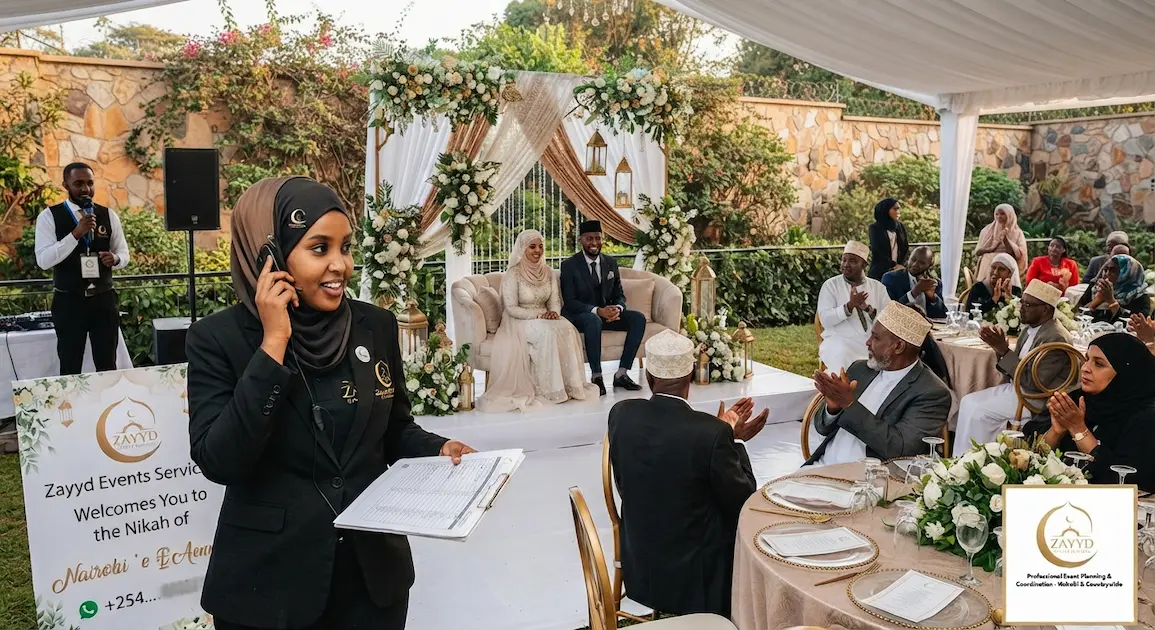
For families looking to bypass the stress that comes with planning an islamic marriage ceremony nikah, it’s best to hire a trusted expert right away.
Zayyd Events Services offers specialized event coordination, professional MC hosting, and décor management tailored specifically for Muslim weddings in Nairobi and across Kenya.
Planning a Muslim wedding ceremony in Nairobi requires much more than a standard wedding checklist; it demands meticulous professional execution, strict religious compliance, and seamless coordination. Whether you are organizing an intimate family gathering in South B, a traditional celebration in Mombasa, or a grand hotel reception in Nairobi's central business district, partnering with vetted professionals bridges the gap between your spiritual vision and flawless execution.
1. The True Significance of a Nikah in Islamic Law and East African Culture
In Islam, marriage (Nikah) is described in the Quran as a solemn covenant (mithaq ghaliz). Unlike civil contracts in Western secular frameworks that view marriage purely as a legal partnership, Islamic jurisprudence views the Nikah as both a legal contract and a profound act of worship (ibadah).
The Pillars (Arkan al-Nikah) That Cannot Be Compromised
For any Nikah to be valid under Shariah law, specific foundational elements must be met explicitly:
- Mutual Consent (Ijab wa Qubool): Both the bride and groom must enter the marriage willingly. Forced marriages are entirely null and void in Islamic law.
- The Presence of a Wali (Guardian): In accordance with mainstream scholarly consensus in East Africa (primarily the Shafi'i school of thought), a bride must be represented by a qualified male guardian—typically her father, grandfather, or brother—who formally consents to the contract on her behalf.
- The Mahr (Bridal Gift): Obligatory upon the groom, the mahr is a financial or material gift given directly to the bride as a symbol of respect, independence, and security. It can be paid immediately (mu'ajjal) or deferred (mu'ajjal).
- Reliable Witnesses: At least two adult, sane, and practicing Muslim male witnesses must be present to hear the verbal exchange and sign the registry documents.
Navigating these religious prerequisites while coordinating modern venue logistics requires a deep understanding of local customs. Professional coordination through teams like Zayyd Events Services ensures that religious protocols are met with absolute respect and accuracy.
2. Navigating Kenyan Statutory Law and Civil Registration
In Kenya, a religious marriage must also harmonize with civil legal requirements under the Marriage Act to ensure full legal protection regarding property, family rights, and administrative documentation.
Legal Requirements for Kenyan Muslim Marriages
- Registered Kadhis and Imams: Under the Kenyan Marriage Act, Islamic marriages are officially recognized when solemnized by an authorized Kadhi, Sheikh, or Imam registered with the Registrar of Marriages. This allows them to issue legally recognized civil marriage certificates directly, preventing the need for secondary registry appointments.
- Documentation Checklist: Both parties must present valid Kenyan national identity cards or passports, birth certificates, and, where applicable, parental or guardian consent letters. For cross-border marriages, special entry permits or conversion clearances may apply.
3. Sourcing Modest and Culturally Aligned Venues in Nairobi
Finding the right venue is one of the most challenging aspects of planning a Muslim wedding in Nairobi. The space must balance aesthetic elegance with functional privacy (hijaab and haya), accommodating family dynamics and prayer schedules.
Popular Venue Categories Across Nairobi
- Mosque Halls & Islamic Community Centers: Facilities attached to major mosques (such as Jamia Mosque or regional community halls) provide an authentic, spiritually grounded backdrop for the actual Aqd al-Nikah (contract signing ceremony).
- Private Gardens and Boutique Estates: For the Walima (reception), private gardens in areas like Lavington, Gigiri, or Karen allow families to customize seating arrangements, establish dedicated family or segregated sections, and manage private staging precisely.
- Indoor Hotel Ballrooms: For larger corporate-style family banquets, Nairobi boasts several upscale hotels that can adapt their floor plans to accommodate modest family layouts.
4. Securing Top-Tier Halal Catering and Banquet Partners
Food serves as a primary expression of hospitality across East African culture. However, for an Islamic wedding, absolute compliance with halal dietary laws is non-negotiable—from the sourcing of livestock to the prevention of cross-contamination in shared venue kitchens.
When planning your wedding feast, collaborating with specialized culinary experts guarantees uncompromised quality and authentic flavor profiles:
- Partner with Capital Table Catering for sophisticated banquet execution, professional service staff, and customized multi-course menu planning.
- Engage Philips Outdoor Chefs for specialized open-air cooking, live-grill stations, and traditional coastal culinary experiences.
- Utilize Topnotch Event Catering Services for comprehensive celebration management, high-volume banquet preparation, and elegant hospitality presentation.
5. Designing a Seamless Event-Day Program and Timeline
A well-structured program protects the flow of the day, ensuring that religious obligations, family photography, and dining run smoothly without feeling rushed.
Recommended Wedding Day Workflow
- Morning Setup & Briefing: Finalizing venue styling, sound check, lighting adjustments, and seating verification.
- The Nikah Solemnization: Arrival of the Imam, wali, groom, and witnesses. The formal delivery of the Ijab wa Qubool, public declaration of the mahr, and signing of the Nikah Nama.
- Prayer Intermissions: Building structured 30-to-45-minute buffers around Dhuhr or Asr prayer times so guests and family members can perform ablution (wudhu) and pray comfortably.
- The Walima Reception: Grand entrance of the couple, celebratory speeches, family photography, and the formal wedding feast.
Authoritative Legal & Sociological References
For deeper research into family law, civil marriage frameworks, and cultural sociology, consult these high-authority resources:
- Review statutory marriage guidelines and civil registration frameworks at the Government of Kenya Marriage Services Portal.
- Access scholarly analysis on Islamic jurisprudence and contract law through the Oxford Islamic Studies Resources.
- Review international human rights and family welfare standards at the OHCHR International Standards Center.
- Analyze cultural preservation and community heritage guidelines via UNESCO Intangible Cultural Heritage Guidelines.
Book Your Trusted Nairobi Event Partner Today
Executing a breathtaking and spiritually fulfilling islamic marriage ceremony nikah is effortless when you collaborate with professionals who understand your values. By securing expert planners, certified halal caterers, and professional coordinators, you ensure your special day is memorable, legally sound, and entirely stress-free.